Most people can name their Chinese zodiac animal. Far fewer know that the sign they've been telling everyone might be wrong — because the Chinese year doesn't begin on the 1st of January. It begins at Lìchūn (立春), the start of spring, around the 4th of February. Born in late January? You may still belong to the previous animal. This is the single most common mistake in Chinese astrology, and it's where any honest reading has to start.
If you'd rather just get the correct answer for your birthday, the free Chinese Zodiac calculator will settle it in a second. But if you want to actually understand what your sign means — read on.
- Your animal sign comes from your birth year — but the year turns at Lichun (~4 Feb), not 1 January.
- Each sign pairs with one of five elements, creating a 60-year cycle (for example, the Fire Horse).
- Compatibility runs in trines (groups of four) and clashes (signs directly opposite).
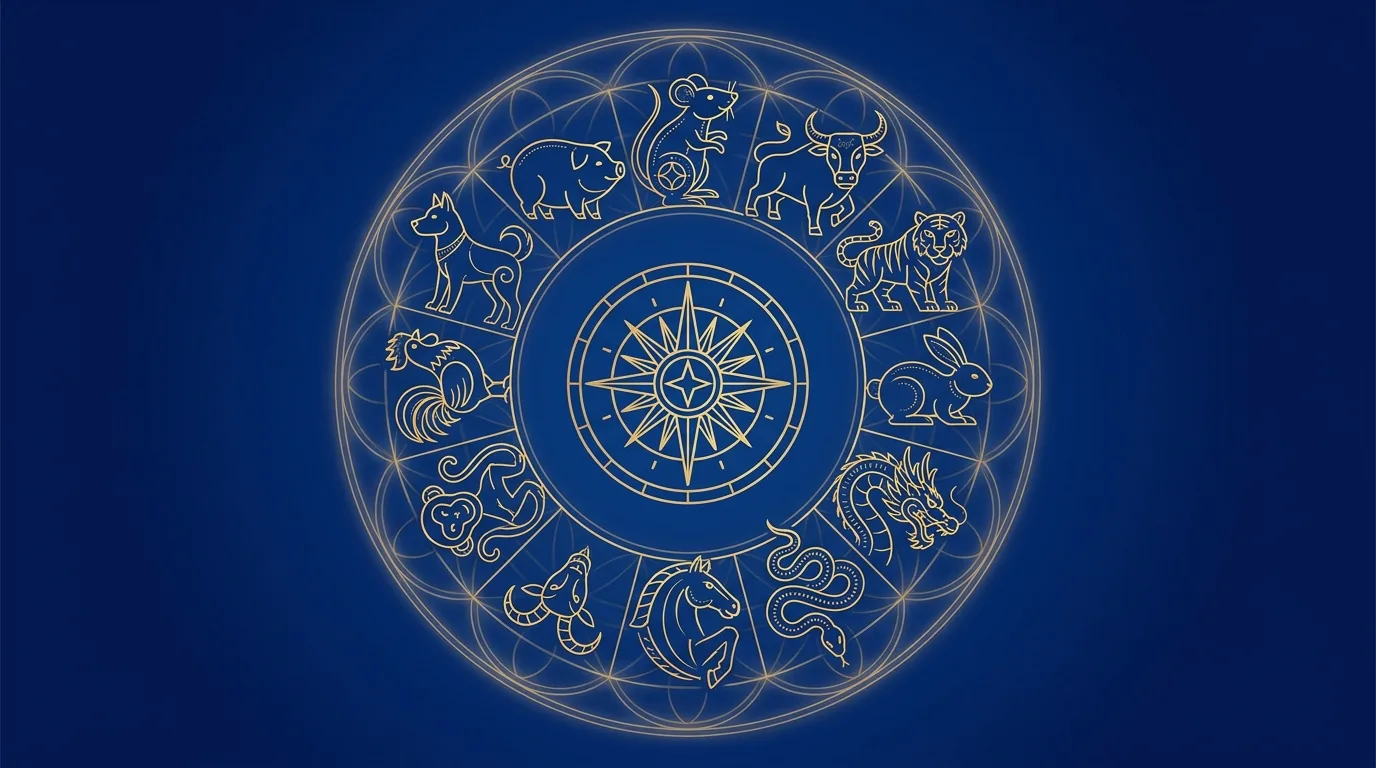
The twelve animals, in order
The zodiac runs on a fixed twelve-year cycle. The order never changes:
Rat, Ox, Tiger, Rabbit, Dragon, Snake, Horse, Goat, Monkey, Rooster, Dog, Pig.
There's a folk story about a great race the Jade Emperor held to decide the order — the Rat riding on the Ox and leaping off at the finish line to win first place is the version most grandmothers tell. It's a lovely tale. What matters underneath it is that each animal is an archetype — a set of tendencies, a temperament, a way of moving through the world.
- Rat — quick, resourceful, a saver and a strategist.
- Ox — patient, dependable, quietly stubborn.
- Tiger — bold, magnetic, allergic to being controlled.
- Rabbit — gentle, diplomatic, sensitive to atmosphere.
- Dragon — ambitious, lucky, a little larger than life.
- Snake — deep, private, a thinker who watches before acting.
- Horse — free, energetic, happiest in motion.
- Goat — kind, artistic, guided by feeling.
- Monkey — clever, playful, endlessly inventive.
- Rooster — precise, confident, a natural organiser.
- Dog — loyal, principled, a defender of the underdog.
- Pig — generous, honest, a lover of comfort and good company.
Your sign is only half the picture
Here's the part the pop-astrology articles skip. Your animal isn't the whole story — it carries two more layers that most people never learn.
The fixed element
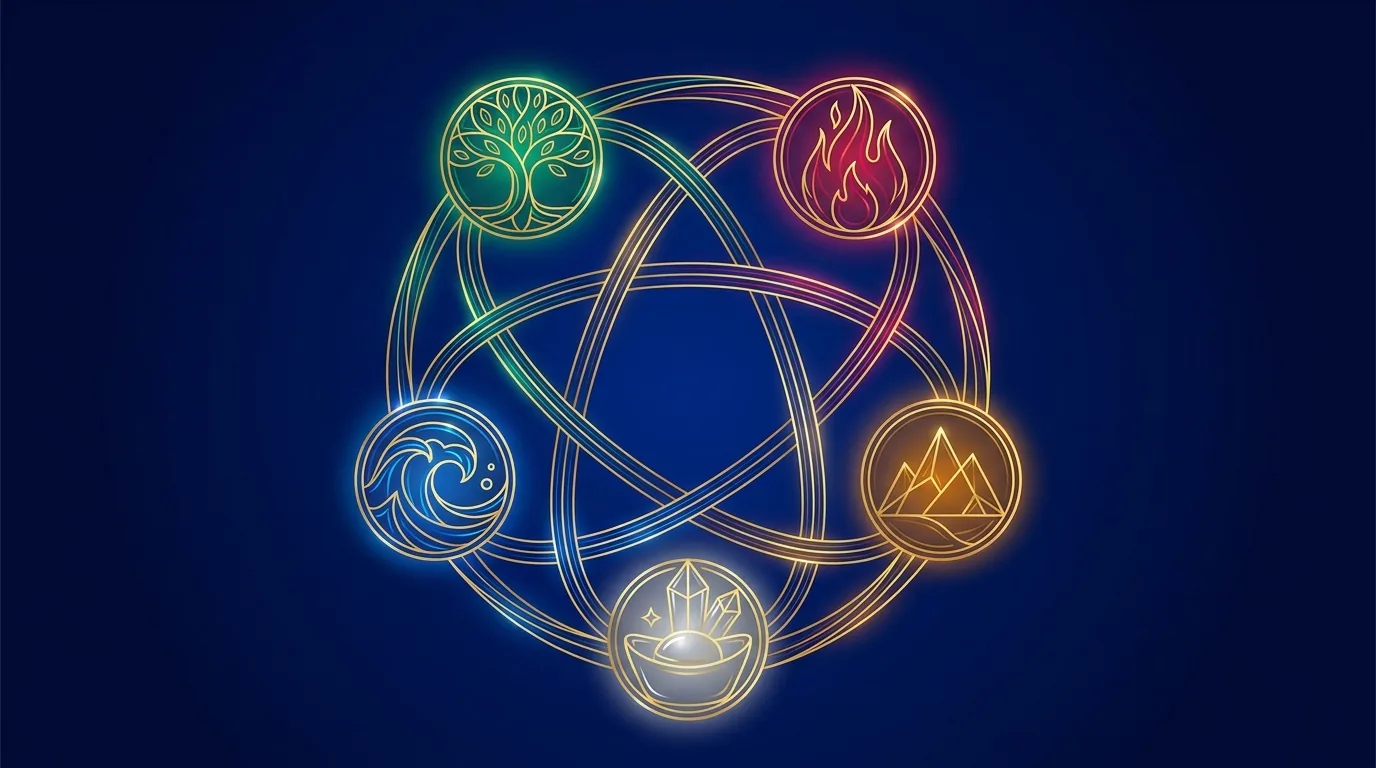
Each animal has a fixed element — Water (Rat, Pig), Wood (Tiger, Rabbit), Fire (Snake, Horse), Metal (Monkey, Rooster) and Earth (Ox, Dragon, Goat, Dog). This element colours the animal's basic nature. A Metal Rooster and a Wood Rabbit are both organised in their own way, but the metal one cuts, and the wood one grows.
The year element
Then there's the element of the specific year you were born, which cycles through all five over sixty years. A 1990 Horse (Metal) and a 2002 Horse (Water) share the Horse's restlessness but wear it completely differently. This is why "I'm a Horse" tells you less than you think, and why the sixty-year cycle — not the twelve — is what a practitioner actually reads.
Yin and yang
Finally, every animal is either yang (Rat, Tiger, Dragon, Horse, Monkey, Dog) or yin (Ox, Rabbit, Snake, Goat, Rooster, Pig). Yang animals push outward; yin animals draw inward. Neither is better. Balance is.
Which signs get along — and which clash
Compatibility in Chinese astrology isn't about who's "nice." It's structural. Two frameworks do most of the work:
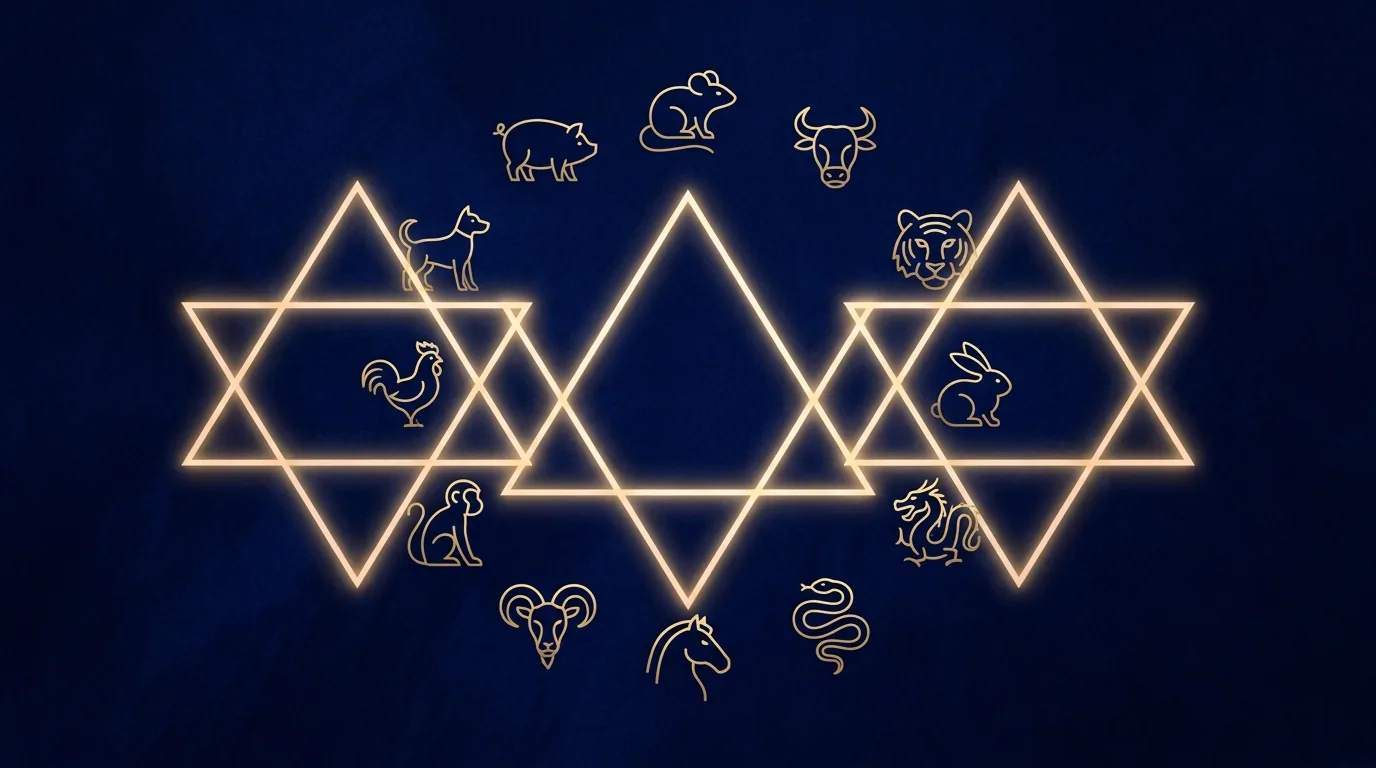
- The San He (三合) trines — three groups of animals that naturally support one another. Rat–Dragon–Monkey, Ox–Snake–Rooster, Tiger–Horse–Dog, and Rabbit–Goat–Pig. If your closest friends keep turning out to be from your trine, that's not a coincidence.
- The clash (沖) — each animal sits directly opposite another on the wheel, six years apart: Rat–Horse, Ox–Goat, Tiger–Monkey, Rabbit–Rooster, Dragon–Dog, Snake–Pig. A clash isn't a curse. It's friction — two strong, opposite energies that can either sharpen each other or wear each other down, depending on maturity.
There's also the quieter Liù Hé (六合), the "secret friend" pairing — a soft, supportive bond that often shows up in the people who just get you. You can see all of this laid out for any two people in the Zodiac Compatibility tool.
The year of your sign is not your lucky year
This surprises people every time. The year your own animal comes around — your běnmìng nián (本命年) — is traditionally considered a year of caution, not celebration. You're standing face to face with Tài Suì (太歲), the Grand Duke of the year, and the old advice is to keep a low profile, avoid unnecessary risk, and wear a touch of red for protection.
If you want to know exactly where the year's energy helps you and where it presses on you, the Annual Forecast reads your animal against the current Tai Sui, and the Annual Afflictions tool shows which directions in your home to keep quiet this year.
So what do you actually do with this?
Treat your sign as a starting point, not a verdict. The animal gives you the archetype; the elements and the year give you the nuance; the compatibility and Tai Sui give you the timing. Used well, it's not fortune-telling — it's self-knowledge with a calendar attached.
Start by getting your sign right (remember Lìchūn), then read it in layers. Your birth chart in the BaZi Four Pillars calculator takes this much further — the zodiac animal is just your year pillar, and there are three more.
Frequently asked
What is my Chinese zodiac sign if I was born in January? It depends on the exact date. The Chinese year begins around 4 February (Lìchūn), so a January birthday usually belongs to the previous year's animal. Check your precise date with the Chinese Zodiac calculator.
Is the Chinese zodiac based on the lunar new year? Popular custom uses Lunar New Year, but classical Chinese astrology (BaZi) uses the solar term Lìchūn, ~4 February. The two can differ by a few weeks, which is why some people are given the "wrong" animal.
What are the most compatible Chinese zodiac signs? Animals in the same San He trine (e.g. Rat–Dragon–Monkey) support each other naturally, and each animal has a "secret friend" (Liù Hé). Direct opposites on the wheel clash and need more maturity to work.