There are many kinds of Feng Shui, and most of what circulates online is the soft, symbolic kind — put a plant here, hang a wind chime there. Xuan Kong Flying Stars (玄空飛星) is the other kind: mathematical, time-sensitive, and, when done properly, uncannily specific. It's the system serious practitioners actually use. And once you see how it works, you can't unsee it.
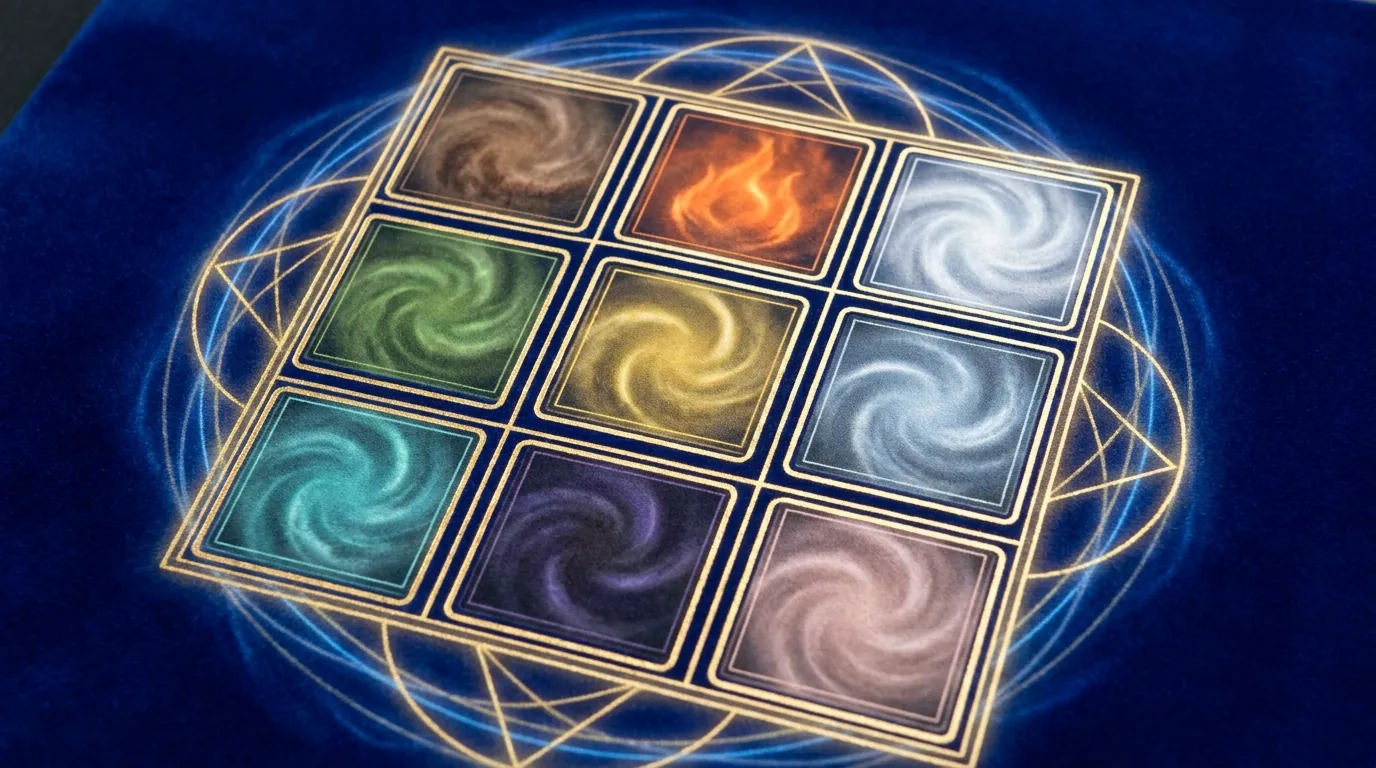
The idea is deceptively simple. Feng Shui divides any space into nine sectors — a three-by-three grid, the Lo Shu (洛書) magic square. Into those nine sectors "fly" nine energies, numbered 1 to 9, each with a distinct character. Where a given number lands, that quality is switched on in that part of your home. And — here's the part beginners miss — the numbers move. They shift by year, and even by month.
You can generate the current chart for any year in the free Flying Stars tool and follow along.
- Feng Shui divides any space into nine sectors; nine numbered stars fly into them and shift each year.
- In Period 9 (from 2024), the 8 is the wealth star and the 5 (Five Yellow) is the one to keep quiet.
- Real remedies use elements — metal drains the Earth stars — not lucky charms.
The nine stars, from best to worst
Each number is a star with a personality. In this current era (Period 9, which began in 2024), the headline players are:
- 8 — the Wealth Star (白). For twenty years the great prosperity star. Where it flies, activate: keep it clean, used, alive.
- 9 — the Future Prosperity & Celebration Star (紫). Rising in importance now — fame, joy, multiplication of whatever it touches.
- 1 — the Victory & Career Star (白). New beginnings, career, clarity. A quiet favourite.
- 6 — the Heavenly Star (白). Authority, mentors, helpful people, disciplined wealth.
- 4 — the Academic & Romance Star (綠). The scholar's star — study, exams, writing, and courtship.
- 3 — the Argument Star (碧). Disputes, gossip, legal friction. Keep it calm.
- 7 — the Robbery Star (赤). Competition and, out of its era, minor loss. Handle discreetly.
- 2 — the Illness Star (黑). The sickness star — where it lands, protect the health of that room.
- 5 — the Five Yellow (黃). The most demanding star of all: misfortune and obstacles if provoked. Not to be feared — to be managed.
Notice something? The "bad" stars aren't disasters. They're pressure points — areas to keep quiet and remedy, not panic over. That's the whole ethic of Flying Stars: you don't chase perfect; you activate the good and calm the difficult.
The two charts: fixed and moving
A proper Flying Star reading actually combines two layers, and this is where it gets powerful.
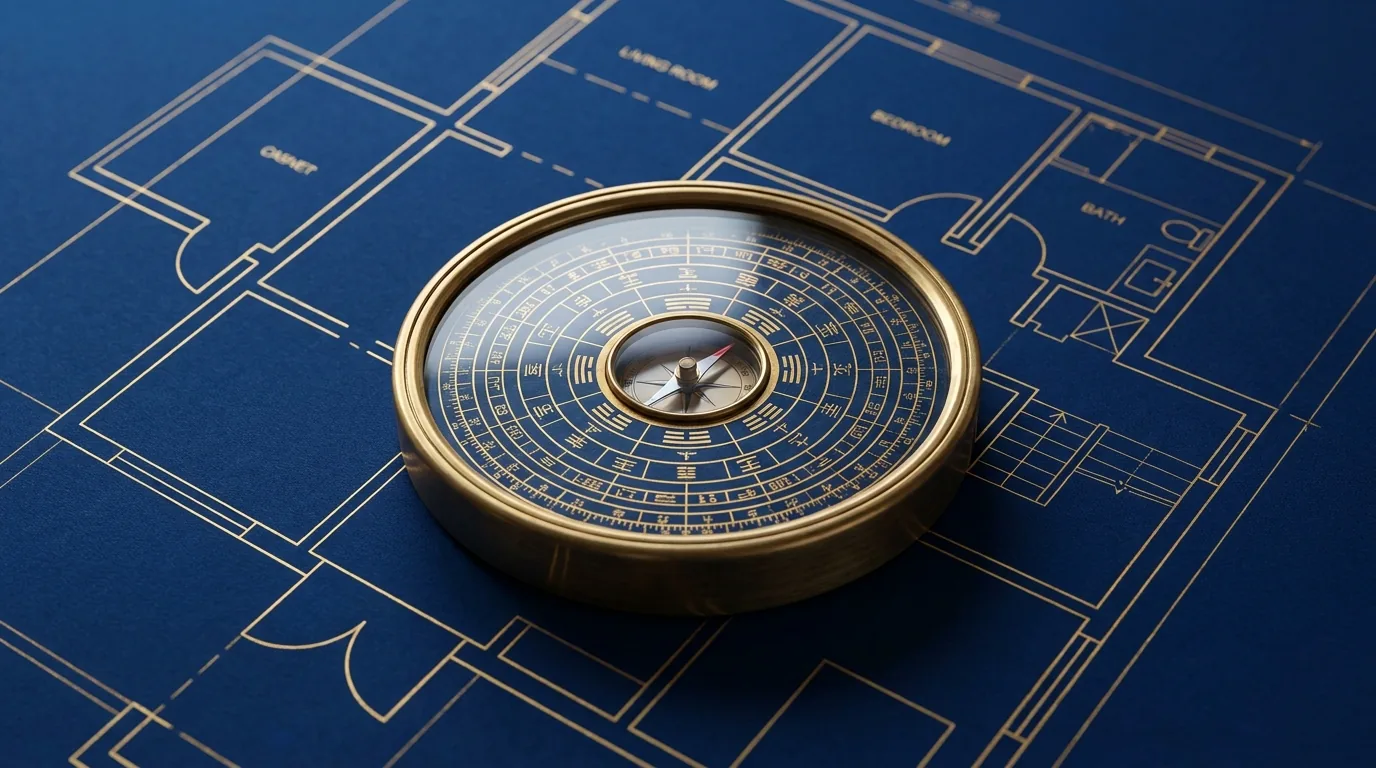
First, the natal chart of your building — a permanent chart cast from the period it was built and the direction it faces. This never changes for the life of the structure, and it's the foundation of everything. Casting it correctly needs an accurate facing direction, which is exactly what a Luo Pan compass reading or the 24 Mountains tool gives you.
Second, the annual (and monthly) stars that visit each year. These are what the Flying Stars tool shows most clearly, and they're why a "good" corner can have an off year, or a quiet corner suddenly light up.
Read together, they answer the practical questions: where should my desk face this year? Which corner activates wealth? Which room needs a metal cure right now?
Remedies: elements, not trinkets
When a difficult star lands somewhere important — the 5 Yellow in your bedroom, say, or the 2 Illness star at your front door — the classical fix isn't a lucky charm. It's the controlling element.
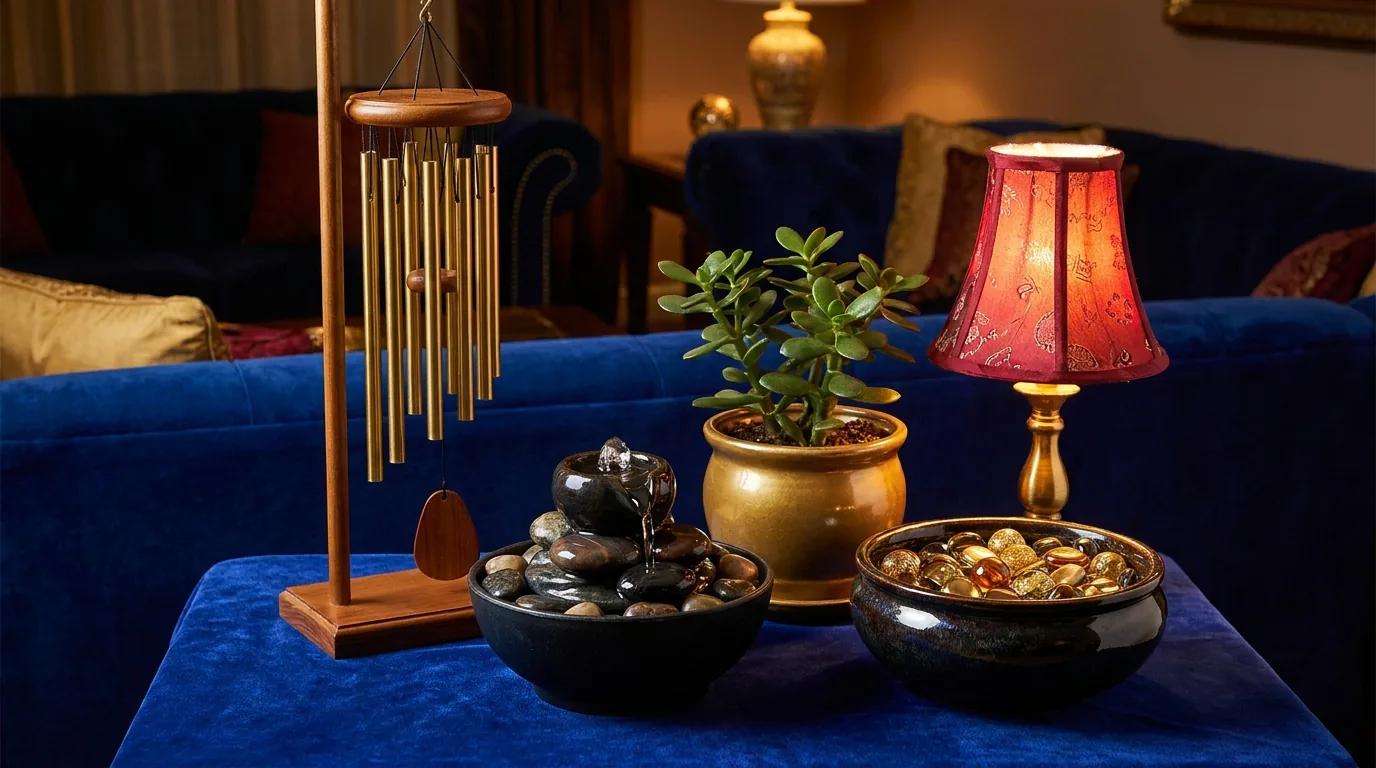
The 5 and 2 are Earth stars, and Earth is drained by Metal — so a brass object, a metal wind chime, or metal-coloured décor quietly disperses them. The 3 (Argument, Wood) is calmed by Fire — warm light, red tones. This is the logic beneath every real Feng Shui remedy: find the element of the problem, apply the element that controls or drains it. No superstition required. The Annual Afflictions tool flags exactly which sectors need this treatment each year.
Where people go wrong
Three mistakes, again and again:
- Using a rough facing direction. A few degrees off can put you in the wrong chart entirely. Measure properly.
- Chasing the annual stars while ignoring the natal chart. The building's permanent chart matters more; the annual is the seasoning, not the meal.
- Over-cluttering with cures. One correct metal object beats a shelf of charms. Feng Shui rewards restraint.
Start simple
You don't need to master all of this to benefit. Begin with the current year: pull up the Flying Stars chart, find where the 8 (activate) and the 5 (keep quiet) have landed in your home this year, and act on just those two. That alone — encouraging one good corner, calming one difficult one — is more real Feng Shui than a houseful of ornaments.
Ancient wisdom, applied with a compass and a little arithmetic. That's Flying Stars.
Frequently asked
What is the wealth star in Flying Stars Feng Shui? In the current Period 9, the 8 is the primary wealth star and the 9 the rising prosperity star. Activate the sector where each lands — keep it clean, bright and in use.
Do Flying Stars really change every year? Yes. The annual stars shift each year (and monthly stars each month) over your building's permanent natal chart, which is why the same room can have a strong year and a quiet one.
How do I find my home's Flying Star chart? You need the period it was built and its exact facing direction, then the nine stars are placed across the Lo Shu grid. The free Flying Stars tool generates the annual chart for any year instantly.